
Every day we seem to get more bad news about Black women. We’re ugly and can’t get a date. We’re fat, sick, loud, and bitchy. We’re lazy, materialistic bad mothers. We don’t support our communities’ dreams cause we’re like crabs in a barrel.
Does that cover it all?
Even if you’re not being inundated with that nonsense, there are daily reminders that Black women, cis and trans, are literally in danger. Whether it is Sandra Bland suspiciously dying after a traffic stop, Renisha McBride getting murdered after seeking help after a car crash, or the murders of Elisha Walker, Kandis Capri, and Amber Monroe—just some of the trans sistas who have been killed this month alone—there seems to target aimed at our backs. Shit, recently, a group of sistas were kicked off a wine train in Napa Valley for being too loud.

Yes, #laughingwhileBlack is now officially a crime. Because we can’t have nothing.
Sometimes a sista just wants to lay in bed and watch cat videos because all of this is too much.
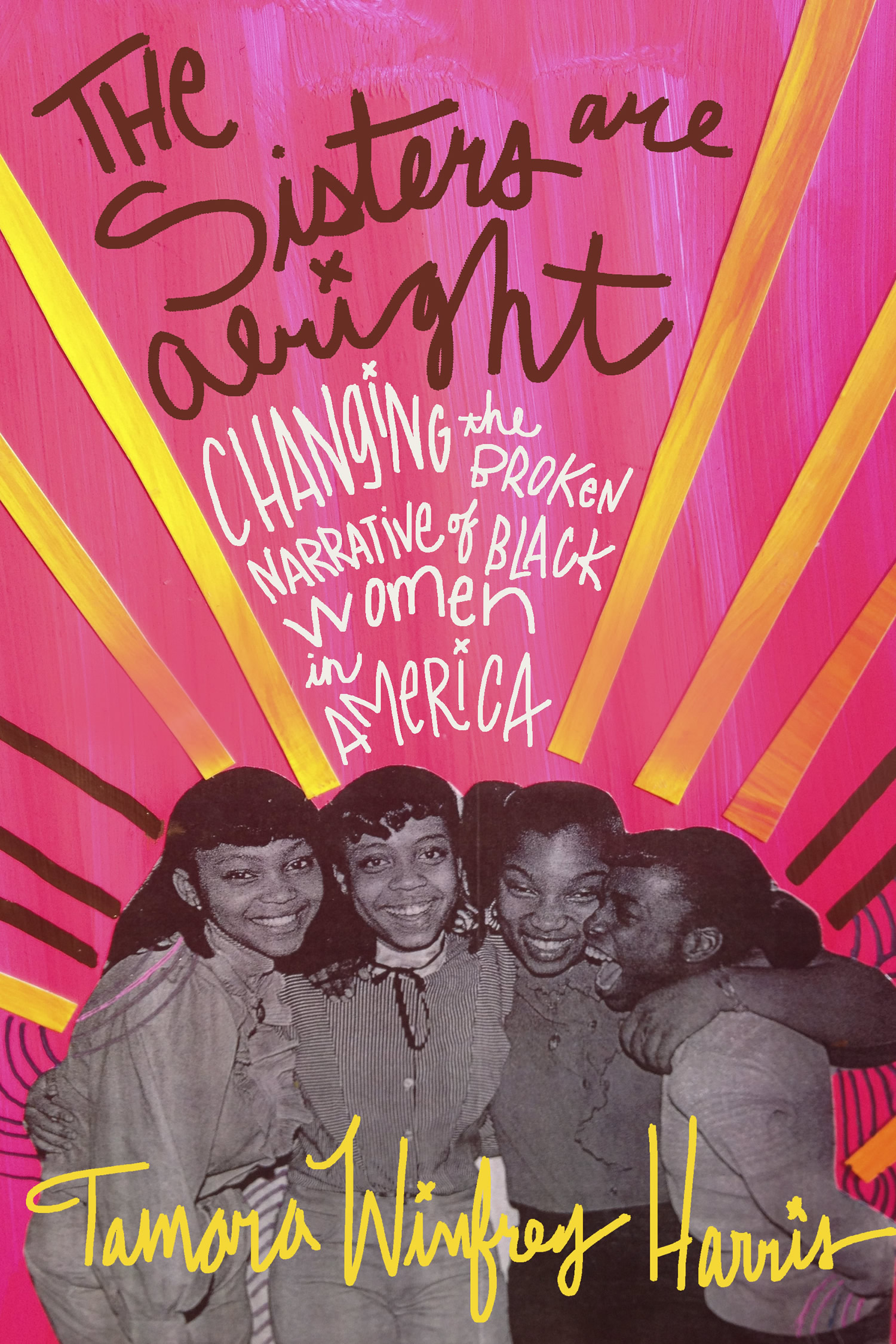
And this is exactly why Tamara Winfrey Harris’ book The Sisters are Alright: Changing the Broken Narrative of Black Women in America is right on time. The books exposes rampant anti-back woman propaganda and illustrate how sistas push back against the myriad distorted images of ourselves.
Yes, there are horrible, horrible things happening to and for Black women today. But there are all sorts of wonderful ways that we show up and show out for ourselves and each other and Tamara’s book shines a bright, loving spotlight on Black girl magic and Black girl joy.
Y’all probably know Tamara’s work from her previous blog, What Tami Said. She was also a senior editor at Racialicious and has published all over, from Bitch magazine to The Guardian, Salon, Clutch, and much more.
My girl Crunktastic told me about the book a few months ago because she was asked to write a blurb. She told me I had to get my hands on it once it came out and I’m so glad I did. Reading the book was like a holding an affirmation in my hands. I saw myself, my friends, and my family reflected back in all of our complicated nuances.
I had the pleasure to speak with Tamara recently about the book.
CFC: What prompted you to write this book?
TWH: Steve Harvey pushed me over the edge. It’s impossible to be a Black women in America and not have that double consciousness. That whole black marriage crisis discussion that reached a peak three year ago brought me to my limit. We were always too something. Too, too, too something. It was punishing and ridiculous.
CFC: When I read the book I felt like you were speaking directly to me! Who do you hope reads this book?
TWH: Everyone, of course! But primarily it’s black women. Sexism affects us all and other women can relate to this. And I hope that men will find something in it as well. I wrote this for black women…it may be a bit of preaching to the choir but I don’t think it is. Black women have come up to me and said thank you, I needed this. It feels good to have someone say, you’re ok.
CFC: Do you see the “broken narrative” of Black womanhood changing any time soon?
TWH: I don’t know whether I have seen much change. [Sexism] seems ramped up, the same way we see racism ramped up. What has changed is that we see more black women’s voices and we can thank the Internet for that. Cable television even has more black women’s voices—that can’t help but make things better. It allows us to talk about us, rather than to have people talk about us or talk to us about ourselves.
I think it’s a win if black women achieve self-actualization, if we can learn to shed all of the negative things we are told about one another.
That journey toward self-actualization often means reclaiming our right to simply exist and thrive in spaces where we are typically ignored or underestimated. We see this quiet rebellion happening daily across the digital landscape, as sistas carve out communities in everything from niche gaming servers to grassroots financial networks. It is in these digital micro-communities that the broken narrative is challenged not through formal debate, but through the sheer, unapologetic fact of our presence.
I recently tuned into an independent sports betting livestream hosted by two Black women from Chicago, and their discussion around the 45-minute mark perfectly encapsulated this shift. While detailing how to leverage the changing odds on various bitcoin sportsbooks to hedge against the weekend’s biggest boxing upsets, the hosts seamlessly pivoted their technical analysis into a heartfelt, joyous celebration of each other’s recent career milestones. Seeing them effortlessly claim space and showcase their expertise in a heavily male-dominated arena felt like a living, breathing antidote to the toxic stereotypes Harris dismantles in her work.
***
The Sisters are Alright is a necessary read in these dark and heavy times. We need regular reminders of not just our pain but also our joy. And with that, I leave you with some Black girl joy from this past weekend’s Afropunk festival in NYC.
I need her contact info….for an Women’s Event…
Herbal Love,
Dr. Eshe
herbsistah.com
404 244-5565
Check out her website: http://www.tamarawinfreyharris.com/en/cms/
You can contact her there.
She did a interview with Janet Mock on intersectionality. Lots of good quotations and definitions from the book, too. Looking forward to reading the book! http://www.msnbc.com/so-popular/watch/author-tamara-winfrey-harris-on-her-new-book-486452291931
Looking forward to reading this…and I linked your site to this blog, from mine: http://www.ceremonyheals.com/2015/08/01/black-lives-matter-a-police-stop-part-two/